Where Nanotechnology Is Entering the Battlefield
Why militaries are turning to nanomaterials and advanced polymers.

Alongside the well-publicised changes reshaping the defence sector—drones, autonomy, and artificial intelligence—there is a quieter shift taking place in procurement that rarely makes headlines in its own right. It is not about new platforms or headline-grabbing weapons systems but something more fundamental: the materials those systems are built from.
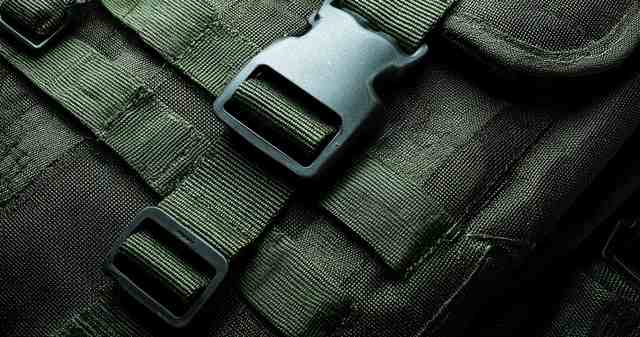
A recent example comes from Mexico, where the Secretariat of National Defense has awarded two contracts for graphene-enhanced equipment, including tactical belts and ripstop fabrics. On the surface, these are modest procurement items, but they point to something far more significant: nanotechnology is no longer confined to laboratories or pilot programmes. It is beginning to appear in frontline procurement decisions and, increasingly, in standard supply chains.
When Materials Become a Strategic Decision
Defence organisations are not early adopters of innovation just for the sake of novelty. They are conservative buyers by necessity, as equipment must work, every time, in conditions that are often unforgiving.
So when materials like graphene begin appearing in procurement contracts, it usually reflects one of two things. Either the technology has reached a level of maturity where risk is acceptable, or the operational need has become strong enough that older materials are no longer sufficient.
In the case of nanomaterials and the nanomodification of polymers, it is a combination of both. This is because militaries are not buying “nanotechnology” as a concept but for its very practical improvements:
- Stronger yet lighter materials for load-bearing equipment.
- Improved resistance to wear, tearing, and environmental stress.
- Multi-functional materials.
- Enhanced thermal and mechanical performance in composites.
- Potential pathways toward smart capabilities in the future.
Mexico’s Nanotech Procurement is a Signal, Not an Outlier
The Mexican contracts are interesting not because they are unique, but because they are the latest in a long line of nanotechnology applications in defense hardware, personal equipment, and munitions.
Across defence procurement globally, similar developments are taking place, often less publicly:
In the United States, agencies such as DARPA have long treated graphene and other carbon-based nanomaterials as strategic research areas rather than speculative science, funding work on nanotechnology to be used in aerospace structures, protective systems, and lightweight composites. Over time, this research focus has helped establish a broader defence ecosystem where even incremental gains in strength-to-weight ratio or energy absorption can translate into significant operational advantage.

In Europe, defence-focused research programmes—particularly through NATO’s Science and Technology Organization (STO) and EU defence innovation initiatives such as the European Defence Fund—have consistently prioritised advanced fibres, nano-enhanced coatings, and multifunctional composites. Applications for these materials range from lightweight armour and corrosion-resistant platforms to smart textiles and electromagnetic shielding for soldiers and vehicles. At the same time, materials research is ongoing and forms a core pillar of next-generation battlefield capability development.
In Asia, defence research organisations such as China’s Academy of Military Sciences (AMS) and National University of Defense Technology (NUDT), India’s Defence Research and Development Organisation (DRDO), and South Korea’s Agency for Defense Development (ADD) have all invested heavily in nanostructured materials for applications including next-generation body armour, lightweight armoured vehicles, and aerospace components, with research focused on improving ballistic resistance, reducing structural weight, and enhancing performance under extreme thermal and mechanical stress.

Where Polymers Do the Heavy Lifting
While polymers act as a structural backbone, nanomaterials like carbon nanotubes function as performance enhancers. The challenge is ensuring that the two are compatible in a way that actually improves performance without introducing instability, inconsistency, or manufacturing complexity. This means that it is not a question of “adding nanotechnology” but of engineering it into something that still behaves like a manufacturable industrial material.
This is the space where AG Defence Polymers operates, creating practical products for the defense industry which have expanded and enhanced properties through the application of nanotechnology.
This includes:
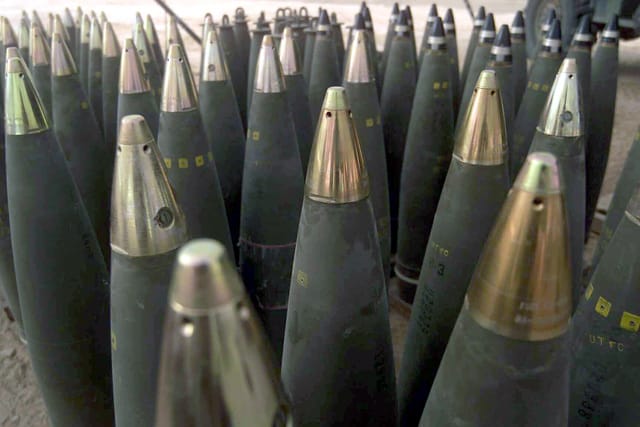
- Shell casings for large, medium, and small caliber ammunition.
- Lightweight, corrosion-resistant, and thermally stable airframes for integration with tactical missile subsystems.
- Tactical drones with polymer airframes constructed for improved flight efficiency, reduced radar visibility, and use in harsh environments.
- Armored plating for vehicles made with lightweight nano-enhanced polymers yet exceeding 4 levels of protection according to the Stanag 4569 standard.
- Personal protective body armour with high ballistic and protective efficiency meeting the standardized STANAG 2920 norm yet still providing freedom of movement.
Because in defence supply chains, a material is only useful if it can be produced repeatedly, tested reliably, and delivered consistently, the value is not in the novelty of the materials themselves but in making them usable under real production constraints.

What the Mexican contracts ultimately illustrate is not a breakthrough moment, but a transition already well underway. Nanotechnology is no longer sitting at the edge of defence research, waiting for validation; it is beginning to appear inside procurement decisions, embedded in equipment that is issued, used, and replaced as part of routine military supply chains.
It is an evolution in defense procurement that is happening because the battlefield is not only changing in terms of what is being deployed. It is changing in terms of what those deployments are made from.
Photo credit: Vecteezy, Vecteezy, Vecteey, Vecteezy, & Vecteezy