The Lightweight Munitions Powering Next-Gen Artillery Logistics
How polymer-based artillery shells can ease the sensor-to-shooter loop.
Recent demonstrations in Estonia proved that pairing VTOL drones with K9 Thunder howitzers drastically cuts the sensor-to-shooter loop. But faster targeting exposes a physical bottleneck: traditional ammunition is too heavy for modern automated logistics.
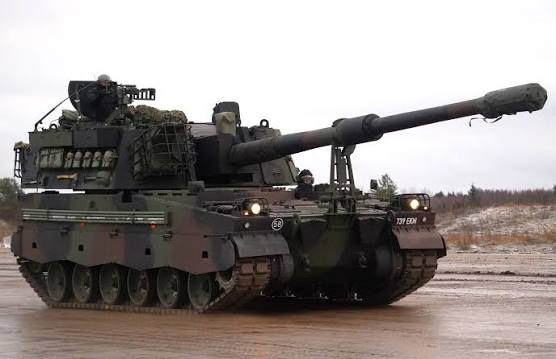
The event was hosted by Hanwha Aerospace at a recent K9 User Club gathering in Estonia, where the operational concept was outlined by combining the firepower and moveability of K9 Thunder 155mm howitzers and K9MH mobile platforms with vertical takeoff and landing (VTOL) uncrewed aerial vehicles (UAVs). By using drones to spot and track threats, transmit target coordinates directly to the howitzer’s fire-direction system, and perform post-strike battle damage assessment (BDA), human operators can be kept away from direct counter-battery fire.
But while autonomous drones and digitized data links dramatically shorten the sensor-to-shooter loop, they also highlight an often-overlooked operational challenge: logistics.
Accelerating target identification means artillery units can execute fire missions faster and more frequently, but to fully realize the benefits of networked, drone-guided targeting, armies must address the physical weight of traditional artillery ammunition.

The Logistics Challenge of Drone-Guided Artillery
Traditional large-caliber artillery shells—utilizing heavy metallic components and traditional casings—carry significant mass. This weight creates logistical friction across the entire supply chain:
- Transport Constraints: Heavy ammunition limits the total number of rounds a single resupply vehicle or automated ammunition handling system can transport before reaching payload limits.
- Handling Friction: Heavier rounds require more energy—whether mechanical or physical—to transport, load, and transfer in high-tempo field environments.
- Fuel and Wear Overhead: Moving heavy ammunition logistics trains increases fuel consumption and accelerates mechanical wear on supply vehicles operating in rugged terrain.
How Polymer Casing Technology Streamlines Ammunition Logistics
Addressing the logistics bottleneck requires innovations in material science. The introduction of high-performance nanostructured polymer ammunition casings for large-caliber rounds (such as 105mm, 122mm, and 155mm) offers a direct path to optimizing supply chains for automated and mobile artillery units.
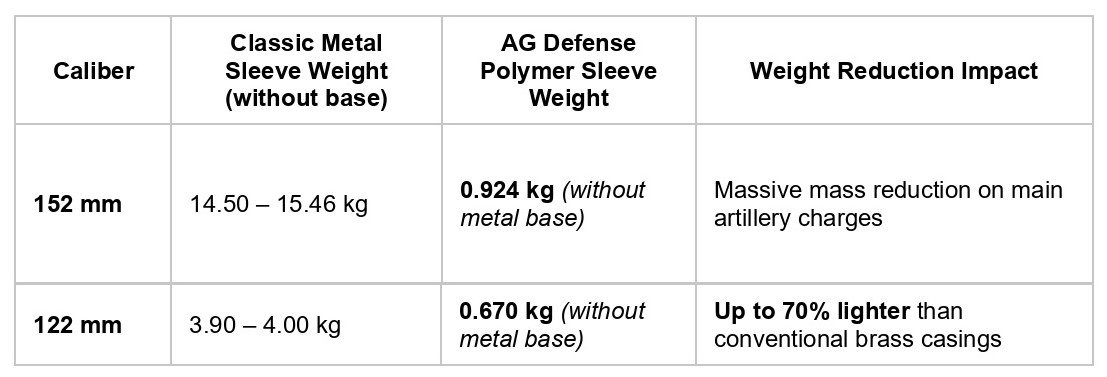
Thanks to this lower weight, plastic cartridges offer significantly easier handling during loading, reduced load on auto-loader systems, and vastly lower logistics and transportation costs.
Technical Performance and Circular Logistics
Made from a proprietary blend of thermoplastics and nanomaterials, polymer cartridges supplied by AG Defense Polymers (who support this webpage) meet all tactical and technical requirements. Across a wide range of properties—including mechanical strength, electromagnetic shielding, electrostatic discharge safety, and chemical resistance—they exceed standard technical benchmarks by 25–30% compared to analogous products.
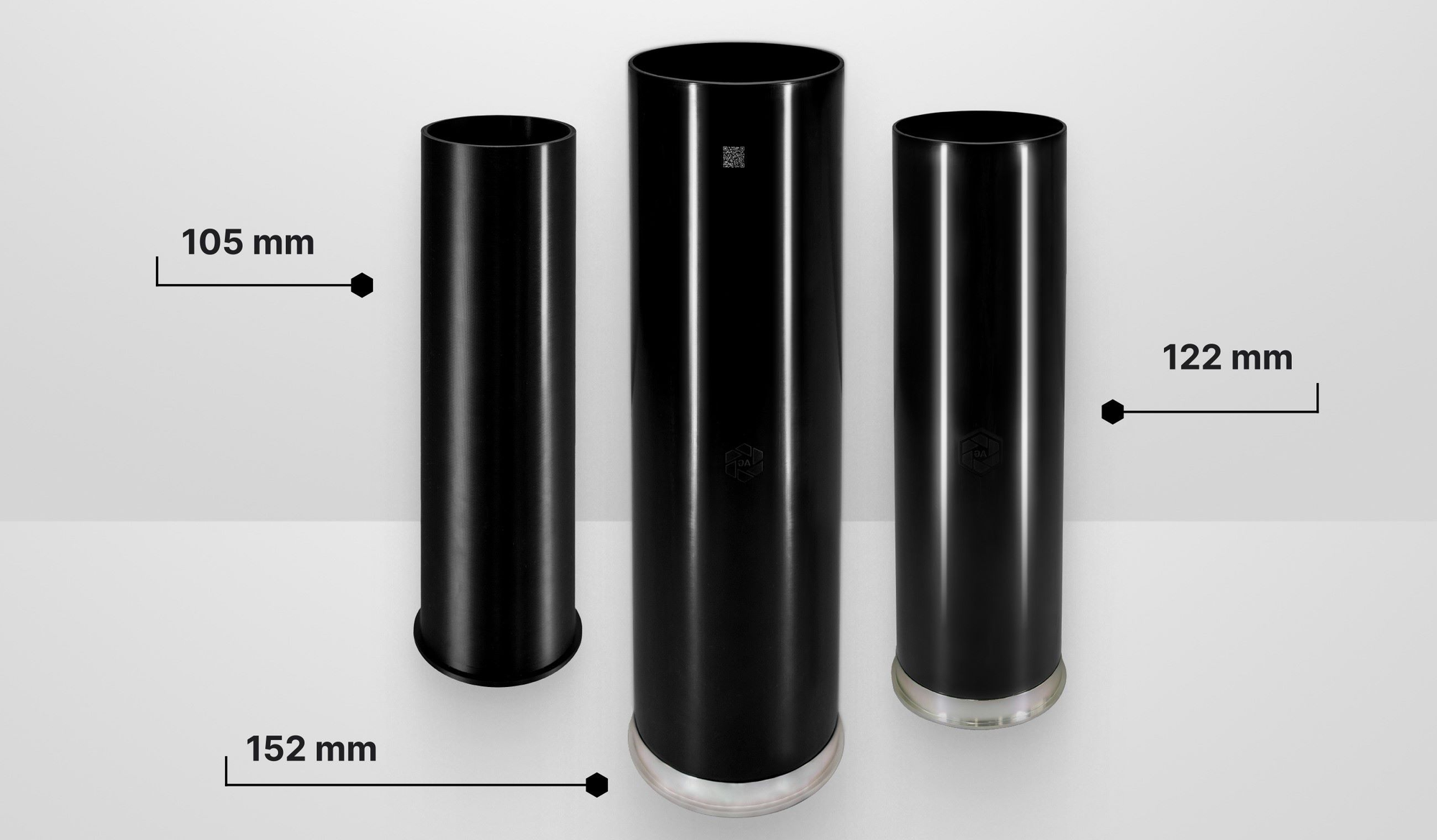
For example, polymer cartridges can tolerate temperatures beyond 3000°C and maximum pressures from powder gases surpassing 5000 bar. Even under harsh circumstances, the antistatic surface resistance of 10 ohms guaranties the safe handling of loaded charges, while its hydrophobic construction means that performance is maintained even in humid or maritime environments.
Thermal Stability and Reuse Cycle
Unlike metal casings that rapidly transfer heat into the gun chamber, polymer cartridges feature low heat accumulation. This maintains lower chamber temperatures even during intensive, rapid-fire drone-guided missions.
Furthermore, polymer cartridges support sustainable, circular logistics:
- Lifespan & Reusability: They have a long operational lifespan and can be reloaded and reused at least 3 times in a row (with guaranteed mechanical integrity and without loss of material performance).
- 100% Recyclability: At the end of their service life, the materials can be fully recycled for partial use in the production of new cartridges or secondary plastic defense components.
Aligning Logistics with Modern Targeting Speed
Concepts like Hanwha’s drone-enabled K9 howitzer demonstrate that digital targeting networks are faster and more accurate than ever. However, digital speed must be supported by physical agility on the ground.
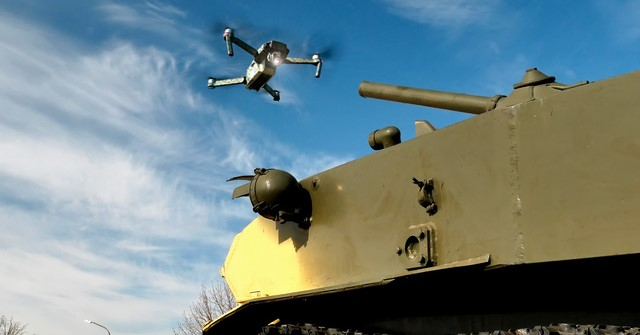
The introduction of drones onto the battlefield has changed many aspects of warfare and questioned the role of modern field artillery. By pairing spotter drones directly into a howitzer’s fire-direction system, the future of gunnery looks much clearer, but only if adjustments are made to the munitions being used.
By integrating nanostructured polymer cartridges into military supply chains, defense forces can ensure their logistics pipeline keeps pace with the modern sensor-to-shooter loop and can ensure the practical advantages of artillery remain.
Photo credit: Wikimedia, Vecteezy, Vecteezy, & NaraGetArchive