How Polymers and Robotics are Redefining Arms Production
Could autonomous additive manufacturing break the deadlock in Ukraine?
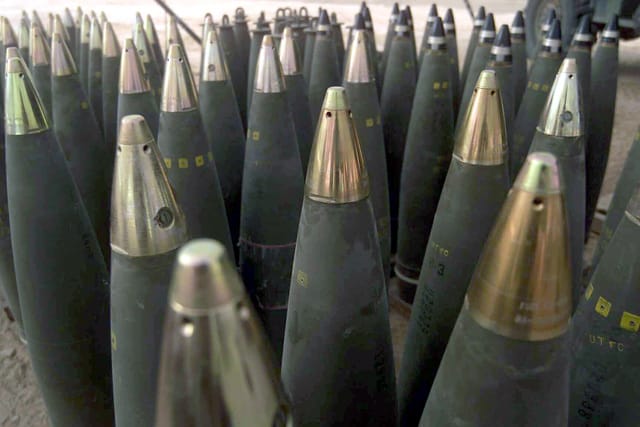
As the Russian/Ukraine war continues its grinding stalemate, the war has become a contest of production. Whichever side can train troops, build drones, repair tanks, and manufacture sufficient missiles, bombs, and artillery shells will be victorious.
In a more global context, the US manufacturing sector is stagnating following years of low investment and offshoring. Consequently, US military chiefs fear that if there was a war between China and the US, then China would hold a long-term strategic advantage, as its much larger manufacturing base would be able to out-produce the US military in terms of missiles, drones, and artillery shells. This is a manufacturing situation which the US National Defense Strategy has termed the ‘pacing challenge.’
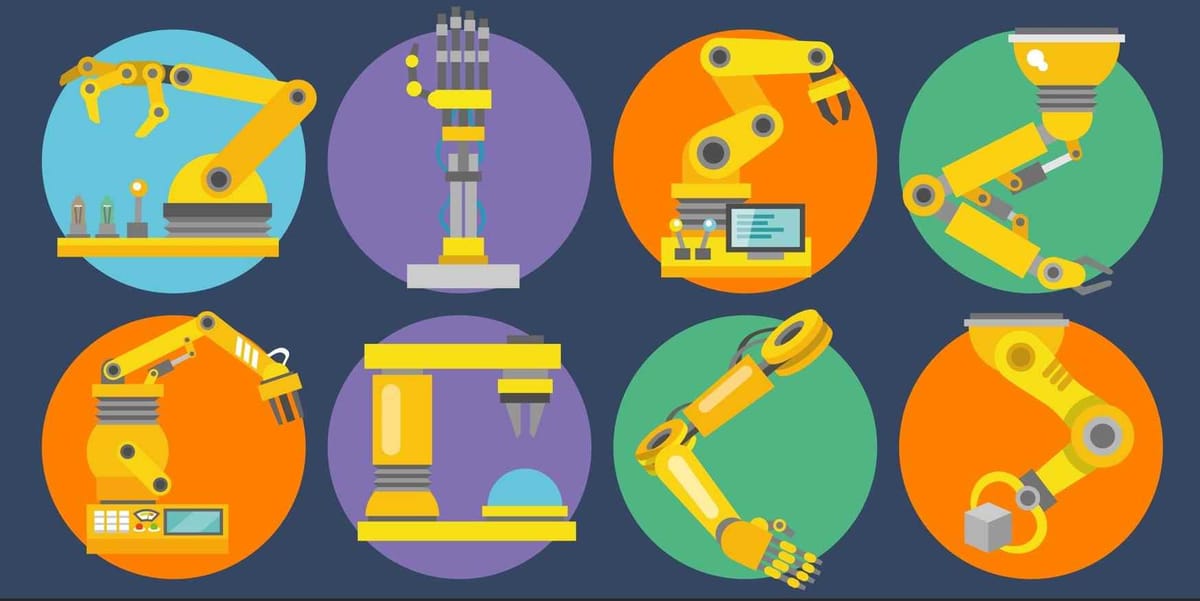
But the issue may about to be turned on its head by a new study which suggests that a modernised polymer sector combined with advanced robotics could revolutionise arms manufacturing and herald a novel approach to defence production. Published in a recent issue of the International Journal of Extreme Manufacturing, the researchers have described a transformative application of AI-driven additive manufacturing (AAM) which could change the arms industry in a way that could break the deadlock in Ukraine.
In a nutshell, the work reviews AI’s role in Additive Manufacturing (AM), emphasizing the shift from Intelligent AM (IAM) to Autonomous AM (AAM) systems which feature control, monitoring, and process autonomy, along with full end-to-end integration.
According to the study, current IAM systems have inherent faults such as fragmented approaches to production and limited decision-making. In response, a four-layer AAM framework is proposed—knowledge, generative, operational, and cognitive—powered by AI agents with lifelong learning. This novel system enables adaptive, predictive, and autonomous manufacturing, while the integration of AI enhances efficiency, flexibility, and quality. The result, the study’s authors claim, is a transformative step toward smarter, more responsive AM technologies for complex environments—including next to battlefields.
As the latest report on the subject by the arms industry journal Defense One explains, “The new system—developed by an international team of researchers from California State University, Northridge; the National University of Singapore; NASA’s Jet Propulsion Laboratory; and the University of Wisconsin-Madison—uses highly-skilled engineers to train robots in a much fuller range of human-like movements, enabling them to perceive and (on a basic level) understand what they are doing. When combined with 3D printing technology, the framework opens up the possibility of complete end-to-end manufacturing of electronics, like the small drones re-shaping the battlefield in Ukraine.”
It is a solution to the two biggest problems facing US military production base.
Low Investment and Skilled Labour Shortage
In recognising the dual threat to both the economic and military power caused by an inadequate American manufacturing sector, both President Trump and his predecessor Biden have attempted to boost domestic investment in manufacturing. While the effectiveness of Trump’s tariff policy remains in the balance, Biden’s CHIPS and Science Act of 2022 provides more than $52 billion of investment for domestic semiconductor manufacturing in an attempt to reduce China's dominance in strategic industries such as microelectronics and advanced materials. Additionally, as a strategic measure, the Pentagon has also started a number of measures to reshore manufacturing of items like microchips and battery components.
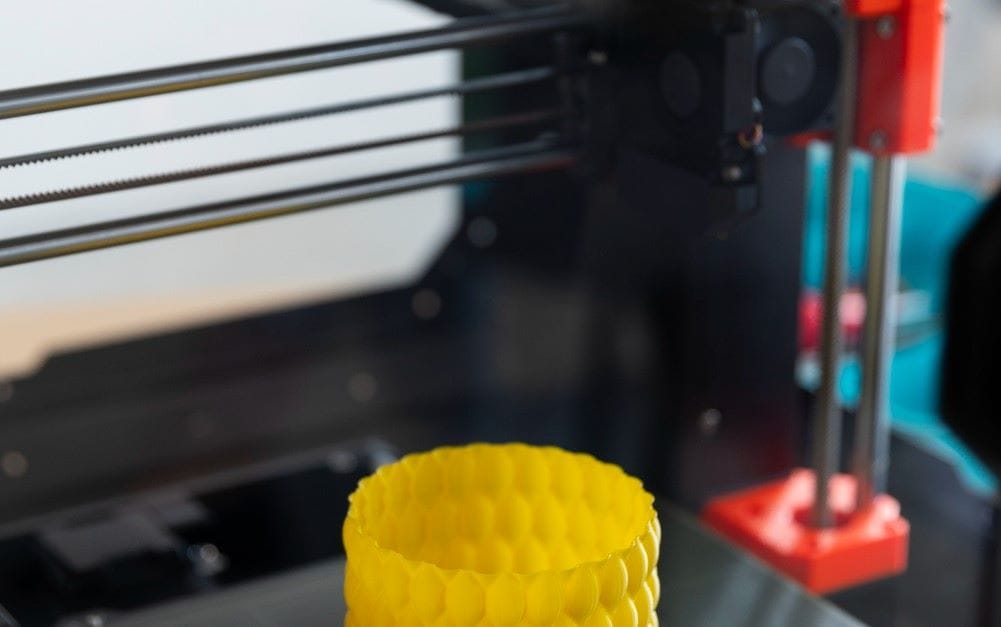
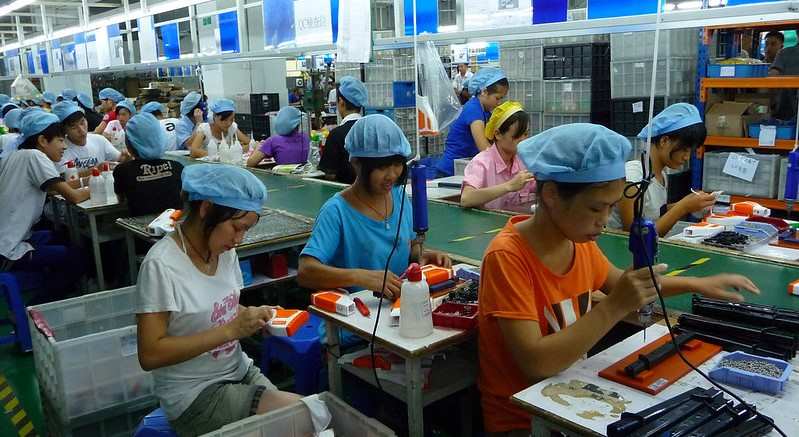
However, even with this investment boost, the US suffers a critical lack of skilled workers capable of working in high-tech factories, such as those producing microprocessors, advanced missile systems, munitions, or autonomous drones.
With the adoption of robotic production lines, this shortfall can be negated, as sufficient investment will allow for fully automated production.
The Logistics Challenge of Military Hardware and Ammunition
A bigger problem is that defense manufacturing is best conducted close to the battlefield. This reduces logistics time and expense and also allows for faster repairs and upgrades to equipment already located at the front.
However, manufacturing with robots requires strict processes on rigid production lines—conditions that are unsuitable for frontlines that can rapidly move. Any attempts to make more flexible robotics have also been unsuccessful—an issue that was made clear in a 2019 Boston Consulting Group report which found manufacturing robots lacked the dexterity and problem-solving skills of humans to be able to conduct repairs or manufacturing on the frontline.
The challenge then becomes how to find a way of replacing human workers in arms factories located close to the fighting.
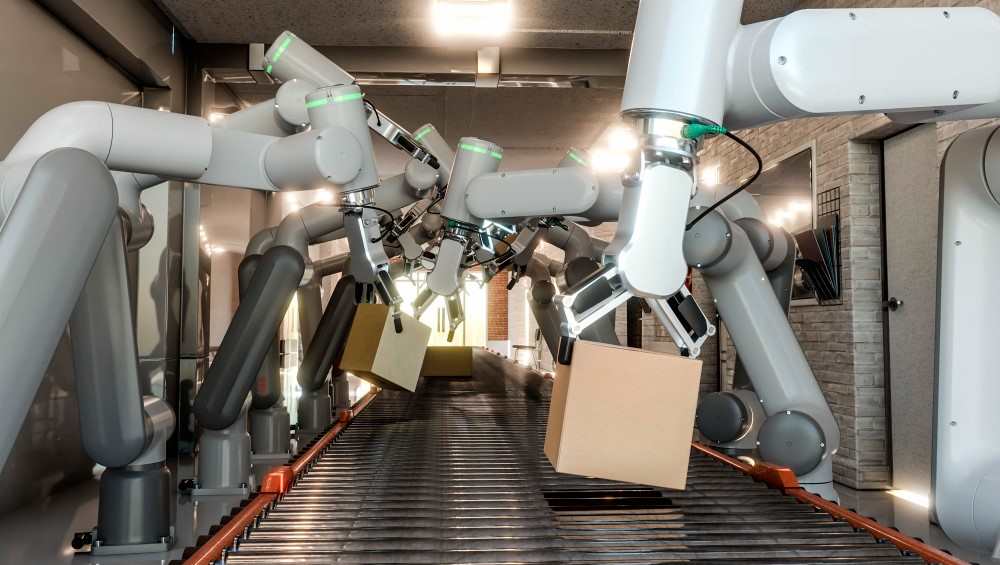
Now this latest study explains how AAM could resolve this problem through a vision of end-to-end autonomy, with a fleet of cooperating robots or drones handling everything from scheduling, process optimisation, and post-print machining to computer-assisted design model preparation and nesting.
At its core AAM is built around the concept of sensor-integrated design, which uses numerous sensors of heat, light, and other phenomena to provide a software ‘brain’ with a sense of perception.
That ‘brain’ will be made up of four layers: a ‘knowledge layer’ at the model's foundation gathers information from sensors, simulations, and previous operations. A ‘generative solution layer’ models decision-making using AI techniques such as knowledge graphs and massive language models. A ‘cognitive layer’ gives machines agency by enabling them to reason, act, and even reflect, while a ‘operational layer’ carries out decisions on hardware, software, and robotic systems.
“Within this [cognitive] layer, AI agents act as high-level controllers, assessing the skill pool in the operational layer to select appropriate skills for task execution based on the current state,” the study states. “These agents are responsible for planning and executing optimal actions, engaging in a lifelong learning process that enhances their expertise through continuous reflection and learning.”
“These advancements pave the way for 3D content creation, potentially bringing us closer to the realization of ‘What you think is what you get,’” the study explains. “By exploring vast design spaces, these tools generate innovative solutions that traditional methods might overlook.”
Adopting this defence manufacturing approach may significantly lower the number of personnel and logistics required at the front lines, as a soldier in the field would be able to scan a damaged part and an AI-enhanced system could design and print a replacement with little supervision.

As global power dynamics increasingly hinge on industrial and technological capabilities, the integration of AI-driven autonomous additive manufacturing (AAM) presents a groundbreaking shift in the future of warfare. It offers not just a potential solution to the West’s long-standing challenges of underinvestment and skilled labour shortages in manufacturing, but also introduces a vision of agile, decentralized production that could radically alter logistics on the battlefield.
By enabling near-frontline arms production and repair through autonomous, sensor-rich systems, AAM could transform static production bottlenecks into dynamic, on-demand solutions. This leap in defence production capacity may not only provide the US with a much-needed strategic edge in its contest with China but also has the potential to reshape the defense sector. Turning the tide in conflicts like Ukraine, where speed, supply, and adaptability may determine the outcome more than sheer troop numbers, tactics, and courage.
Photo credit: Flickr, Flickr, Freepik, Freepik, & Macrovector