Applications and Implications of Military Nanotechnology
Nanotechnology in defense is increasing the risk of asymmetric nanowars.

Technological superiority has always dictated the outcome of military conflict, placing the science of nanotechnology at the primary frontier for modern defense research. But where will this lead and at what price?
While nanoscale breakthroughs are already revolutionizing everyday sectors—from telecommunications and agriculture to construction and transport—their impact on defense systems will doubtless change how wars will be fought and who will win.

Next-Generation Personal Armor
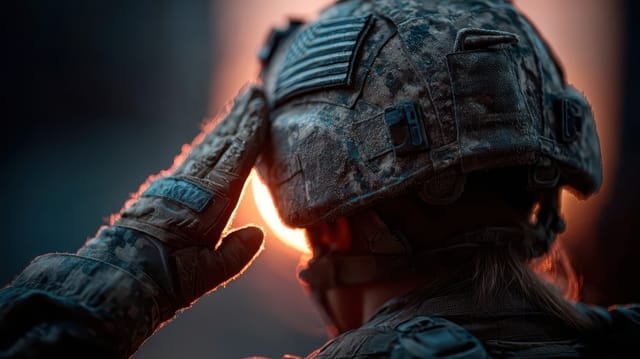
One clear example of this is the research partnership between MIT, the U.S. Army, and the Institute for Soldier Nanotechnologies (ISN), who are collaborating to develop advanced "battlesuits" designed to minimize infantry casualties. Key concepts include the following:
- Agent Detection: Embedded nano-sensors designed to identify chemical and biological threats in real time.
- Advanced Ballistic Protection: Energy-absorbing materials that offer high-level blast and projectile defense.
- Lightweight Flexibility: Next-generation armor that pairs high strength with the weight and maneuverability of athletic wear.
- Physiological & Location Tracking: Integrated sensors monitor vital signs (heart rate, blood pressure etc.) while built-in transmitters guide field medics and medevac crews directly to wounded personnel.
Nanotech-Reinforced Polymers in Personal Protection
Traditional polymers like Kevlar and polyurethane are essential to modern protective gear, but integrating carbon nanotubes (CNTs), graphene, and nanoceramics into these matrices pushes their capabilities far beyond conventional limits.
Incorporating CNTs into polymers creates nanocomposites with unmatched tensile strength and energy absorption, allowing ballistic vests to dissipate the kinetic energy of incoming rounds across millions of micro-layers without shattering or deforming. Furthermore, researchers are dispersing nanoparticles into shear-thickening fluids (STFs) within soft polymer fabrics. These "smart" liquid polymers remain supple during normal movement but instantly lock into a rigid matrix upon high-velocity impact, giving soldiers flexible, lightweight protection that hardens instantly when struck.
Polymer Nanocomposites in Shell Casings and Munitions
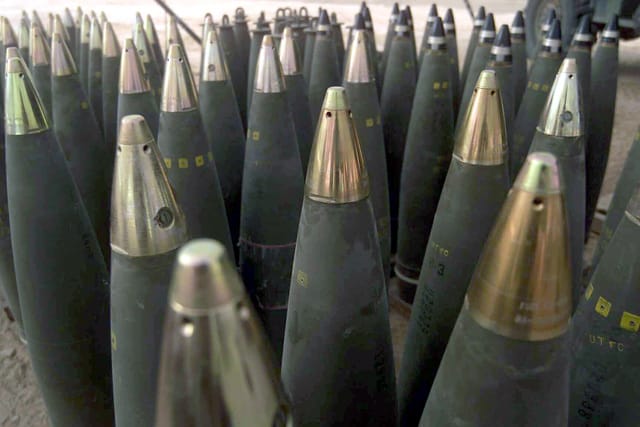
Nanotechnology is also driving a major transition from heavy metal shell casings to lightweight polymer-matrix composites. While standard polymers typically melt or rupture under the high temperatures and intense pressures of gun chambers, reinforcing them with ceramic nanoparticles or carbon nanofibers dramatically increases their thermal stability, shear resistance, and structural rigidity. These nanostructured polymer casings significantly reduce overall ammunition weight—allowing troops and logistics systems to carry more rounds—while maintaining the pressure thresholds required for long-range ballistic precision.
Further Military Applications for Nanotechnology
Elsewhere, defense research teams are looking to integrate nanomaterials into ballistics to create high-density nano-powders which can be packed into smaller projectiles, dramatically increasing range and payload yield. This could lead to ultra-compact explosives—potentially yielding the power of 100 tonnes of TNT in a device weighing just 1–2 kilograms.
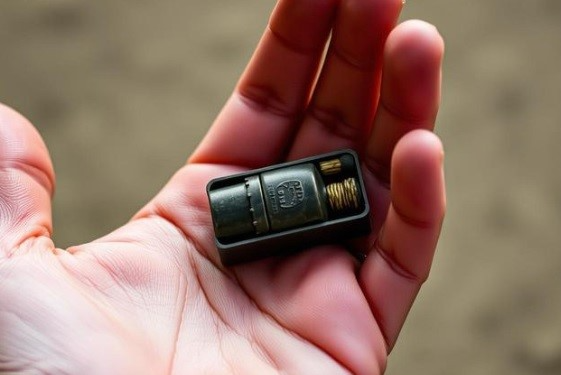
Additionally, vehicles and soldiers may be outfitted with micro antennae, which can be incorporated straight into metals, rubbers, or plastic or inlaid into a soldier's uniform using nanomaterials interwoven into the fabric. This will make it possible to use wireless connections for improved communication, acoustic arrays, micro-GPS receivers, and tags for remote identification. Then, in real time, battlefield commanders would be aware of the location of every soldier and piece of equipment on the battlefield.
Strategic Risks and Ethical Dilemmas
As with chemical and biological weapons, the proliferation of military nanotechnology raises severe ethical and regulatory challenges. While nano-sensors can help detect radiation or toxic agents, the creation of destabilizing "super-weapons" threatens to disrupt the global balance of power.
Enforcing international arms control in this sector presents a unique challenge, as nanoscale research is easy to conceal. As national security expert Margaret Kosal noted in her 2014 study ‘Military Applications of Nanotechnology: Implications for Strategic Security’, “Even if a transnational regulatory framework is established, it is impossible to determine if a nation is non-compliant if one is unable to determine the entire scope of research, development, or manufacturing.”

Beyond tactical advantages, the existential risks are significant. Studies on global catastrophic risk highlight the danger of arms races involving molecular nanotechnology. Much like the advent of nuclear weapons triggered the Cold War, uncontrolled defense nanotechnology could usher in an era of asymmetric "nanowars"—a strategic reality that military planners and defense manufacturers must navigate with extreme caution.
Nanotechnology Shattering Boundaries
Nanotechnology is so vast and powerful that it is hard to predict exactly where it will go or what capabilities the weapons of the future will have.
This includes the possibility that nanotechnology could provide a weapon more devastating than thermonuclear. As a Global Catastrophic Risk Survey published by Oxford University noted, there is a 5% probability that a conflict utilising "molecular nanotech weapons" may lead to the ultimate extinction of humanity.
In the same way that the development of nuclear weapons altered world politics following World War II, nanotechnology in defensive systems could also upset the harmony and peace of the international system. According to a 2017 assessment from the U.S. Department of Defense, "the Cold War was caused by the threat of nuclear weapons." Nanotechnology is predicted to follow a similar pattern, potentially ushering in a new era of devastation known as "nanowars."
There are plenty of reasons why manufacturers should look to nanotechnology for improvements to body armor, ammunition cartridges, ballistic materials, and communication systems. But given the price at stake, everyone working in the defence sector should also be aware of what nanotechnology is capable of.