Why Defense Is Turning to Advanced Polymers
From polymer-cased ammunition to composite vehicle hulls, advanced polymers are changing how defense equipment is being designed.

Military equipment is being asked to carry more capability while becoming lighter, more mobile, and more durable. For defense manufacturers, this is creating a materials challenge: how can weight be reduced without compromising the strength, thermal stability, protection, or reliability that military equipment demands?
To answer this, engineers are frequently turning to advanced polymers and polymer composites, but rather than simply replacing metals with plastics, they are also selecting and modifying materials to deliver specific properties.
Recent developments in India illustrate this shift where the country's Defence Research and Development Organisation (DRDO) is developing polymer-cased ammunition designed to reduce the weight carried by soldiers. At the same time, DRDO researchers are developing advanced composite materials for the hull of a next-generation infantry combat vehicle.

Although these projects involve very different applications, they are addressing the problem of improving defense equipment performance without carrying unnecessary weight.
Reducing Weight With Polymer-Cased Ammunition
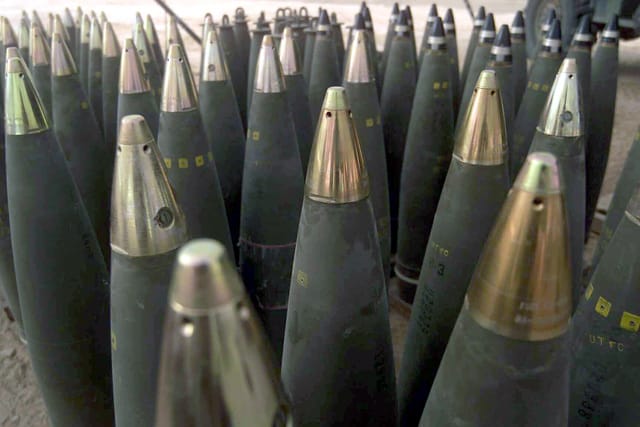
Central to India’s desire to replace traditional brass cartridge cases in small-arms ammunition is reducing the weight of each round by around 25–30%. Not only does this become significant on the battlefield when soldiers are carrying large quantities of munitions, but the switch to polymer casings also lowers the logistical burden.
To do so means using more than just regular plastic, as a cartridge case has to withstand considerable mechanical and thermal stresses during loading and firing. Advanced polymers are therefore needed to provide the necessary strength and stability, including in the base rim, making the project an example of materials optimisation rather than just the replacement of metals.
Moreover, the U.S. military is also incorporating polymers and composites into its latest small-arms systems. The M7 NGSW-R, for example, uses 6.8×51mm ammunition with a polymer case and brass base, while its magazine is also manufactured from lightweight polymer.
Composite Materials Move Into Military Vehicles
The use of polymer composites is also extending into military vehicles, as India’s DRDO has developed an advanced composite hull for a next-generation infantry combat vehicle. According to The Times of India, the development is intended to provide a lightweight solution for vehicle protection, as by using a polymer composite, the vehicle gains extra mobility, transportability, and lower fuel consumption, all while maintaining comparable shielding to conventional armour materials.
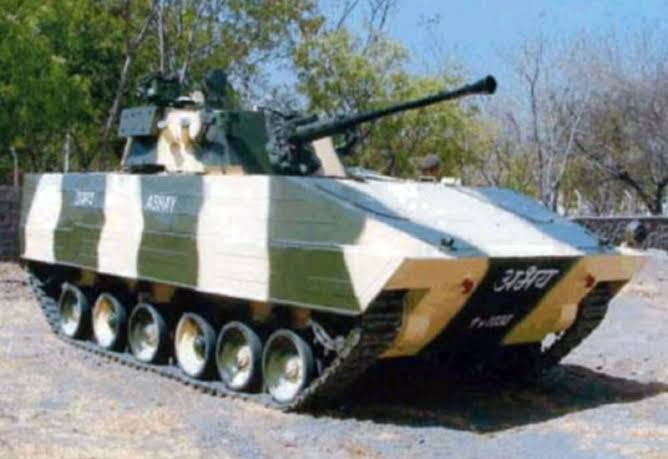
The vehicle hull therefore provides a useful parallel with the polymer ammunition project, as in both cases, engineers are looking beyond conventional materials to find ways of reducing weight without simply sacrificing performance.
Taking Defence Polymers Further With Nanotechnology
But advanced polymer development does not stop at selecting the right polymer, as nanotechnology now provides another way to modify materials and tailor their properties to a specific application.

By incorporating nanomaterials into polymer formulations, AG Defense Polymers, a Czech-based supplier to the arms sector, has developed materials that can be tailored to demanding defense applications, including ballistic protection, shell cartridges, UAV platforms, and vehicle armor. Depending on the formulation and application, nanomodification can be used to influence properties such as mechanical strength, thermal stability, durability, electrical conductivity, and weight.
For example, the nanomodification of polymers can provide the following:
- Shell cartridges with a 25% reduction in energy consumption during firing due to a polymer case weighing 5 g vs. 10–12 g standard brass case.
- Medium caliber cartridges with nanostructured polymers which allow for optimized pressure curves and predictable ignition behavior.
- Small caliber cartridges with optimized internal volume, so that ~6% less powder charge is sufficient to achieve a comparable ballistic performance.
- Tactical missile subsystem casings with corrosion-resistant bodies and a reduced radar cross-section.
- UAV platforms with polymer airframes for improved flight efficiency and reduced radar visibility.
These examples are only the beginning of how advanced polymers are impacting the defense industry. Not by simply replacing metal with plastic, but by designing materials around the precise requirements of modern defense equipment.
Through the application of nanotechnology, manufacturers have greater control over polymer properties, opening a route towards lighter, stronger, and more specialised materials for the next generation of defense systems.